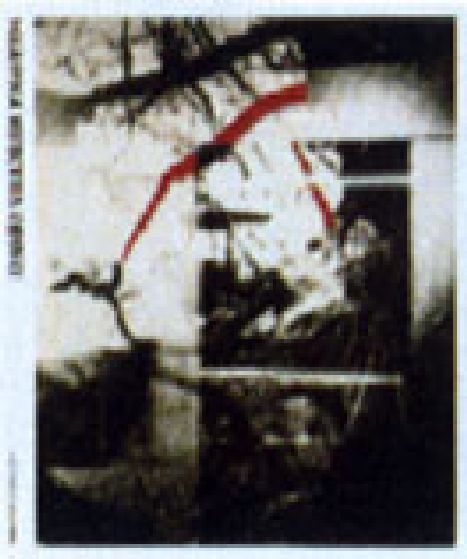
Kara Walker. Burning Village
Michael Jenkins and Javier Romero Collection in the MACA
25,00€


Walker’s work (Stockton, California, 1969) addresses the themes of violence, identity, race and sexuality in the context of the ongoing psychological wounds caused by the tragic legacy of slavery, offering a critical perspective on history while examining racial and gender stereotypes in contemporary society.
Known for her cut-paper silhouettes, which draw on Victorian shadow portraits, shadow theatre and magic lantern traditions, Walker employs satire and archetypes in works of striking formal beauty to expose the contradictions of national self-image, while casting a sharp, subversive gaze on the art-historical references that inform her practice.
From the outset, Walker’s characters perform scenes marked by chaotic energy and dark humour to explore race, identity, power and desire as systems of oppression and subjugation across centuries and continents. Themes such as slavery, sex and social injustice recur in her work. As Walker herself notes, “I’m always reflecting on current events and the overlap between the historical and the mythical.”
Through drawing, printmaking, sculpture, video and installation, she investigates US narratives and myths – misremembered histories, complicit continuities and violent ruptures. These media allow her to explore representations of race in modern and contemporary art and the need to forge new narratives challenging how history is viewed and understood. Walker’s imagery, drawn from both historical realism and imaginative realms, captivates through emotional intensity, intellectual depth and striking visual beauty.
- 7 days for returns. Read conditions
- Contact by phone on +34 963 176 600 or e-mail at tiendaonline@ivam.es